
 自定义账号系统
目前 Zadig 用户系统采用了开源项目 Dex(opens new window) 作为身份连接器,但 Dex 支持的协议列表(Dex 支持的协议(opens new window))有限,Zadig 则基于 Dex 官方库实现了一些标准的扩展,如 OAuth 协议等。如果用户自身的账号系统在 Zadig 官方支持之外,可以通过 Fork koderover/dex(opens new window) 编写 Connector 实现自定义账号系统的集成。
# 自定义账号系统登录流程图
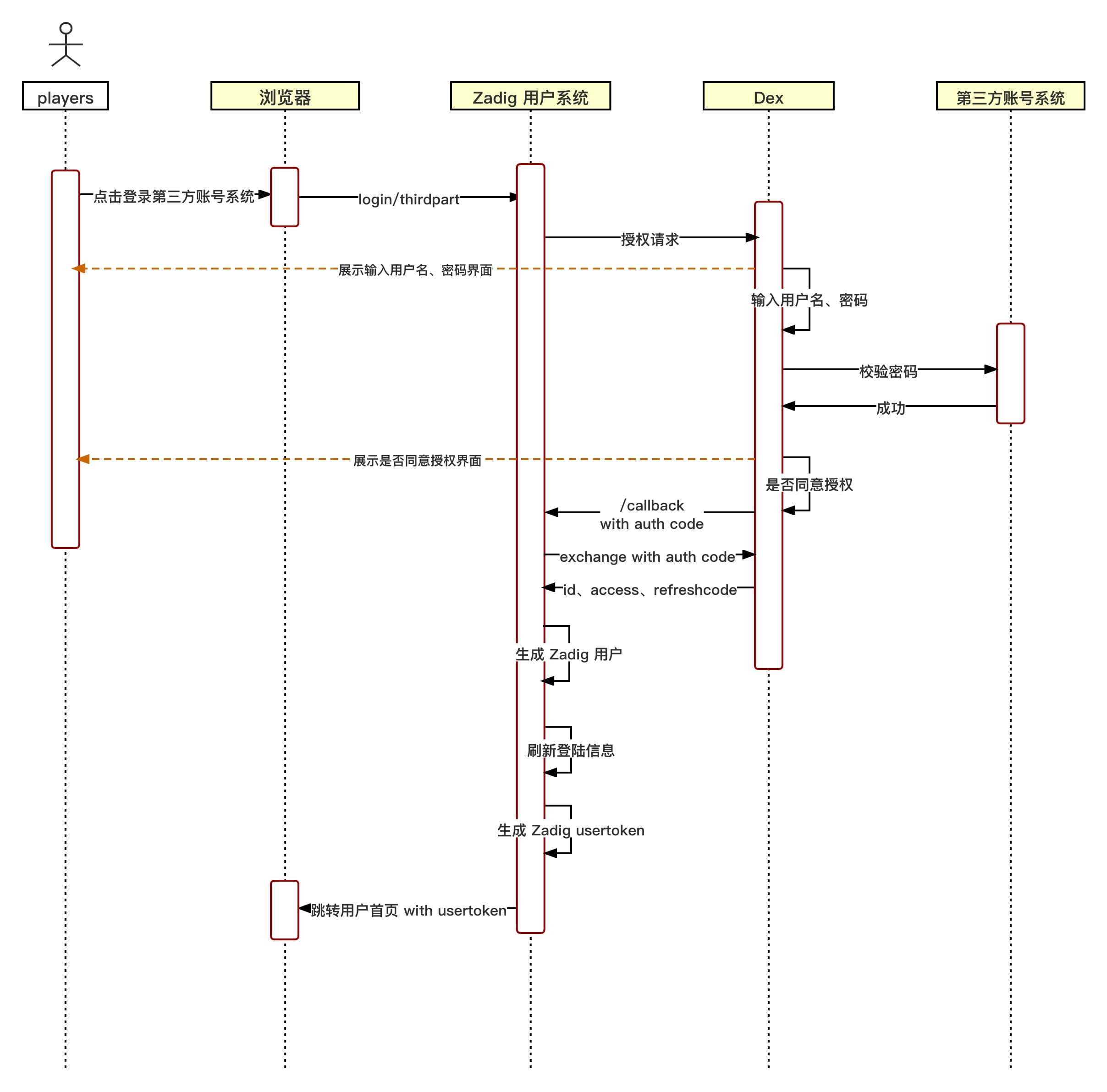
# 自定义账号系统集成流程
# 步骤 1 :编写自定义 Dex Connector
- fork koderover/dex(opens new window)
- 编写 Dex 自定义 Connector (基于最新 Branch release-1.10.0)
- 目前 Dex Connector 接口定义于 dex/connector/connector.go(opens new window) 中,官方抽象了
PasswordConnector、CallbackConnector、RefreshConnector、SAMLConnector四种接口,用户可以根据自己账号系统情况实现自己的 Connector,参考 dex/connector 的各种 Connector 组合实现这四种接口。
以下是对各个接口的简要说明,根据账号系统登录的具体交互方式需要实现对应的接口:
| 接口名 | 使用说明 | 目前可参考已有实现 |
|---|---|---|
| PasswordConnector | 1. 简单使用用户名密码方式登录授权获取用户信息的情况。 2. Dex 和账号系统的交互是同步的情况 | keystone、atlassiancrowed、ldap、mock/passwordConnector、passwordDB(位于 dex/server/server.go(opens new window)) |
| CallbackConnector | 1. 通过重定向获取用户信息的情况 2. Dex 和账号系统的交互是异步的情况 | mock/Callback、bitbucketcloud、authproxy、gitea、github、gitlab、google、linkedin、microsoft、oauth、oidc、openshift |
| SAMLConnector | 实现 HTTP POST 绑定的 SAML 连接器。RelayState 由服务器处理 | saml |
| RefreshConnector | 实现后可以更新客户端 claims | mock/Callback、bitbucketcloud、atlassiancrowed、gitea、github、gitlab、google、ldap、linkedin、microsoft、mock/passwordConnector、oidc、passwordDB(位于dex/server/server.go) |
- 将添加的自定义 connector type 和名称加入 dex/server/server.go 的 ConnectorsConfig 中。
# 参考例子
以 dex/connector 目录下的 OAuth connector 为例讲解。
- 实现 connector interface
此 connector 实现了 CallbackConnector interface。
以下为 OAuth connector 代码
点击查看
package oauth

import (
   "context"
   "crypto/tls"
   "crypto/x509"
   "encoding/base64"
   "encoding/json"
   "errors"
   "fmt"
   "io/ioutil"
   "net"
   "net/http"
   "strings"
   "time"

   "golang.org/x/oauth2"

   "github.com/dexidp/dex/connector"
   "github.com/dexidp/dex/pkg/log"
)

type oauthConnector struct {
   clientID             string
   clientSecret         string
   redirectURI          string
   tokenURL             string
   authorizationURL     string
   userInfoURL          string
   scopes               []string
   userIDKey            string
   userNameKey          string
   preferredUsernameKey string
   emailKey             string
   emailVerifiedKey     string
   groupsKey            string
   httpClient           *http.Client
   logger               log.Logger
}

type connectorData struct {
   AccessToken string
}

type Config struct {
   ClientID           string   `json:"clientID"`
   ClientSecret       string   `json:"clientSecret"`
   RedirectURI        string   `json:"redirectURI"`
   TokenURL           string   `json:"tokenURL"`
   AuthorizationURL   string   `json:"authorizationURL"`
   UserInfoURL        string   `json:"userInfoURL"`
   Scopes             []string `json:"scopes"`
   RootCAs            []string `json:"rootCAs"`
   InsecureSkipVerify bool     `json:"insecureSkipVerify"`
   UserIDKey          string   `json:"userIDKey"` // defaults to "id"
   ClaimMapping       struct {
      UserNameKey          string `json:"userNameKey"`          // defaults to "user_name"
      PreferredUsernameKey string `json:"preferredUsernameKey"` // defaults to "preferred_username"
      GroupsKey            string `json:"groupsKey"`            // defaults to "groups"
      EmailKey             string `json:"emailKey"`             // defaults to "email"
      EmailVerifiedKey     string `json:"emailVerifiedKey"`     // defaults to "email_verified"
   } `json:"claimMapping"`
}

func (c *Config) Open(id string, logger log.Logger) (connector.Connector, error) {
   var err error

   if c.UserIDKey == "" {
      c.UserIDKey = "id"
   }

   if c.ClaimMapping.UserNameKey == "" {
      c.ClaimMapping.UserNameKey = "user_name"
   }

   if c.ClaimMapping.PreferredUsernameKey == "" {
      c.ClaimMapping.PreferredUsernameKey = "preferred_username"
   }

   if c.ClaimMapping.GroupsKey == "" {
      c.ClaimMapping.GroupsKey = "groups"
   }

   if c.ClaimMapping.EmailKey == "" {
      c.ClaimMapping.EmailKey = "email"
   }

   if c.ClaimMapping.EmailVerifiedKey == "" {
      c.ClaimMapping.EmailVerifiedKey = "email_verified"
   }
   oauthConn := &oauthConnector{
      clientID:             c.ClientID,
      clientSecret:         c.ClientSecret,
      tokenURL:             c.TokenURL,
      authorizationURL:     c.AuthorizationURL,
      userInfoURL:          c.UserInfoURL,
      scopes:               c.Scopes,
      redirectURI:          c.RedirectURI,
      logger:               logger,
      userIDKey:            c.UserIDKey,
      userNameKey:          c.ClaimMapping.UserNameKey,
      preferredUsernameKey: c.ClaimMapping.PreferredUsernameKey,
      groupsKey:            c.ClaimMapping.GroupsKey,
      emailKey:             c.ClaimMapping.EmailKey,
      emailVerifiedKey:     c.ClaimMapping.EmailVerifiedKey,
   }

   oauthConn.httpClient, err = newHTTPClient(c.RootCAs, c.InsecureSkipVerify)
   if err != nil {
      return nil, err
   }

   return oauthConn, err
}

func newHTTPClient(rootCAs []string, insecureSkipVerify bool) (*http.Client, error) {
   pool, err := x509.SystemCertPool()
   if err != nil {
      return nil, err
   }

   tlsConfig := tls.Config{RootCAs: pool, InsecureSkipVerify: insecureSkipVerify}
   for _, rootCA := range rootCAs {
      rootCABytes, err := ioutil.ReadFile(rootCA)
      if err != nil {
         return nil, fmt.Errorf("failed to read root-ca: %v", err)
      }
      if !tlsConfig.RootCAs.AppendCertsFromPEM(rootCABytes) {
         return nil, fmt.Errorf("no certs found in root CA file %q", rootCA)
      }
   }

   return &http.Client{
      Transport: &http.Transport{
         TLSClientConfig: &tlsConfig,
         Proxy:           http.ProxyFromEnvironment,
         DialContext: (&net.Dialer{
            Timeout:   30 * time.Second,
            KeepAlive: 30 * time.Second,
            DualStack: true,
         }).DialContext,
         MaxIdleConns:          100,
         IdleConnTimeout:       90 * time.Second,
         TLSHandshakeTimeout:   10 * time.Second,
         ExpectContinueTimeout: 1 * time.Second,
      },
   }, nil
}

func (c *oauthConnector) LoginURL(scopes connector.Scopes, callbackURL, state string) (string, error) {
   if c.redirectURI != callbackURL {
      c.logger.Errorf("expected callback URL %q did not match the URL in the config %q", callbackURL, c.redirectURI)
      return "", fmt.Errorf("expected callback URL %q did not match the URL in the config %q", callbackURL, c.redirectURI)
   }

   oauth2Config := &oauth2.Config{
      ClientID:     c.clientID,
      ClientSecret: c.clientSecret,
      Endpoint:     oauth2.Endpoint{TokenURL: c.tokenURL, AuthURL: c.authorizationURL},
      RedirectURL:  c.redirectURI,
      Scopes:       c.scopes,
   }

   return oauth2Config.AuthCodeURL(state), nil
}

func (c *oauthConnector) HandleCallback(s connector.Scopes, r *http.Request) (identity connector.Identity, err error) {
   q := r.URL.Query()
   if errType := q.Get("error"); errType != "" {
      c.logger.Errorf("get error:%s", q.Get("error_description"))
      return identity, errors.New(q.Get("error_description"))
   }

   oauth2Config := &oauth2.Config{
      ClientID:     c.clientID,
      ClientSecret: c.clientSecret,
      Endpoint:     oauth2.Endpoint{TokenURL: c.tokenURL, AuthURL: c.authorizationURL},
      RedirectURL:  c.redirectURI,
      Scopes:       c.scopes,
   }

   ctx := context.WithValue(r.Context(), oauth2.HTTPClient, c.httpClient)

   token, err := oauth2Config.Exchange(ctx, q.Get("code"))
   if err != nil {
      c.logger.Errorf("OAuth connector: failed to get token: %v", err)
      return identity, fmt.Errorf("OAuth connector: failed to get token: %v", err)
   }

   client := oauth2.NewClient(ctx, oauth2.StaticTokenSource(token))

   userInfoResp, err := client.Get(c.userInfoURL)
   if err != nil {
      c.logger.Errorf("OAuth Connector: failed to execute request to userinfo: %v", err)
      return identity, fmt.Errorf("OAuth Connector: failed to execute request to userinfo: %v", err)
   }
   defer userInfoResp.Body.Close()

   if userInfoResp.StatusCode != http.StatusOK {
      c.logger.Errorf("OAuth Connector: failed to execute request to userinfo: status %d", userInfoResp.StatusCode)
      return identity, fmt.Errorf("OAuth Connector: failed to execute request to userinfo: status %d", userInfoResp.StatusCode)
   }

   var userInfoResult map[string]interface{}
   err = json.NewDecoder(userInfoResp.Body).Decode(&userInfoResult)
   if err != nil {
      c.logger.Errorf("OAuth Connector: failed to parse userinfo: %v", err)
      return identity, fmt.Errorf("OAuth Connector: failed to parse userinfo: %v", err)
   }

   userID, found := userInfoResult[c.userIDKey].(string)
   if !found {
      c.logger.Errorf("OAuth Connector: not found %v claim", c.userIDKey)
      return identity, fmt.Errorf("OAuth Connector: not found %v claim", c.userIDKey)
   }

   identity.UserID = userID
   identity.Username, _ = userInfoResult[c.userNameKey].(string)
   identity.PreferredUsername, _ = userInfoResult[c.preferredUsernameKey].(string)
   identity.Email, _ = userInfoResult[c.emailKey].(string)
   identity.EmailVerified, _ = userInfoResult[c.emailVerifiedKey].(bool)

   if s.Groups {
      groups := map[string]struct{}{}

      c.addGroupsFromMap(groups, userInfoResult)
      c.addGroupsFromToken(groups, token.AccessToken)

      for groupName := range groups {
         identity.Groups = append(identity.Groups, groupName)
      }
   }

   if s.OfflineAccess {
      data := connectorData{AccessToken: token.AccessToken}
      connData, err := json.Marshal(data)
      if err != nil {
         c.logger.Errorf("OAuth Connector: failed to parse connector data for offline access: %v", err)
         return identity, fmt.Errorf("OAuth Connector: failed to parse connector data for offline access: %v", err)
      }
      identity.ConnectorData = connData
   }
   return identity, nil
}

func (c *oauthConnector) addGroupsFromMap(groups map[string]struct{}, result map[string]interface{}) error {
   groupsClaim, ok := result[c.groupsKey].([]interface{})
   if !ok {
      return errors.New("cannot convert to slice")
   }

   for _, group := range groupsClaim {
      if groupString, ok := group.(string); ok {
         groups[groupString] = struct{}{}
      }
   }

   return nil
}

func (c *oauthConnector) addGroupsFromToken(groups map[string]struct{}, token string) error {
   parts := strings.Split(token, ".")
   if len(parts) < 2 {
      return errors.New("invalid token")
   }

   decoded, err := decode(parts[1])
   if err != nil {
      return err
   }

   var claimsMap map[string]interface{}
   err = json.Unmarshal(decoded, &claimsMap)
   if err != nil {
      return err
   }

   return c.addGroupsFromMap(groups, claimsMap)
}

func decode(seg string) ([]byte, error) {
   if l := len(seg) % 4; l > 0 {
      seg += strings.Repeat("=", 4-l)
   }

   return base64.URLEncoding.DecodeString(seg)
}
1
2
3
4
5
6
7
8
9
10
11
12
13
14
15
16
17
18
19
20
21
22
23
24
25
26
27
28
29
30
31
32
33
34
35
36
37
38
39
40
41
42
43
44
45
46
47
48
49
50
51
52
53
54
55
56
57
58
59
60
61
62
63
64
65
66
67
68
69
70
71
72
73
74
75
76
77
78
79
80
81
82
83
84
85
86
87
88
89
90
91
92
93
94
95
96
97
98
99
100
101
102
103
104
105
106
107
108
109
110
111
112
113
114
115
116
117
118
119
120
121
122
123
124
125
126
127
128
129
130
131
132
133
134
135
136
137
138
139
140
141
142
143
144
145
146
147
148
149
150
151
152
153
154
155
156
157
158
159
160
161
162
163
164
165
166
167
168
169
170
171
172
173
174
175
176
177
178
179
180
181
182
183
184
185
186
187
188
189
190
191
192
193
194
195
196
197
198
199
200
201
202
203
204
205
206
207
208
209
210
211
212
213
214
215
216
217
218
219
220
221
222
223
224
225
226
227
228
229
230
231
232
233
234
235
236
237
238
239
240
241
242
243
244
245
246
247
248
249
250
251
252
253
254
255
256
257
258
259
260
261
262
263
264
265
266
267
268
269
270
271
272
273
274
275
276
277
278
279
280
281
282
283
284
285
286
287
2
3
4
5
6
7
8
9
10
11
12
13
14
15
16
17
18
19
20
21
22
23
24
25
26
27
28
29
30
31
32
33
34
35
36
37
38
39
40
41
42
43
44
45
46
47
48
49
50
51
52
53
54
55
56
57
58
59
60
61
62
63
64
65
66
67
68
69
70
71
72
73
74
75
76
77
78
79
80
81
82
83
84
85
86
87
88
89
90
91
92
93
94
95
96
97
98
99
100
101
102
103
104
105
106
107
108
109
110
111
112
113
114
115
116
117
118
119
120
121
122
123
124
125
126
127
128
129
130
131
132
133
134
135
136
137
138
139
140
141
142
143
144
145
146
147
148
149
150
151
152
153
154
155
156
157
158
159
160
161
162
163
164
165
166
167
168
169
170
171
172
173
174
175
176
177
178
179
180
181
182
183
184
185
186
187
188
189
190
191
192
193
194
195
196
197
198
199
200
201
202
203
204
205
206
207
208
209
210
211
212
213
214
215
216
217
218
219
220
221
222
223
224
225
226
227
228
229
230
231
232
233
234
235
236
237
238
239
240
241
242
243
244
245
246
247
248
249
250
251
252
253
254
255
256
257
258
259
260
261
262
263
264
265
266
267
268
269
270
271
272
273
274
275
276
277
278
279
280
281
282
283
284
285
286
287
- 将添加的自定义 connector type 和名称加入 dex/server/server.go 的 ConnectorsConfig 中,如下所示。
点击查看
// ConnectorsConfig variable provides an easy way to return a config struct
// depending on the connector type.
var ConnectorsConfig = map[string]func() ConnectorConfig{
   "keystone":        func() ConnectorConfig { return new(keystone.Config) },
   "mockCallback":    func() ConnectorConfig { return new(mock.CallbackConfig) },
   "mockPassword":    func() ConnectorConfig { return new(mock.PasswordConfig) },
   "ldap":            func() ConnectorConfig { return new(ldap.Config) },
   "gitea":           func() ConnectorConfig { return new(gitea.Config) },
   "github":          func() ConnectorConfig { return new(github.Config) },
   "gitlab":          func() ConnectorConfig { return new(gitlab.Config) },
   "google":          func() ConnectorConfig { return new(google.Config) },
   "oidc":            func() ConnectorConfig { return new(oidc.Config) },
   // 这个位置需要加自定义 connector type
   "oauth":           func() ConnectorConfig { return new(oauth.Config) },
   "saml":            func() ConnectorConfig { return new(saml.Config) },
   "authproxy":       func() ConnectorConfig { return new(authproxy.Config) },
   "linkedin":        func() ConnectorConfig { return new(linkedin.Config) },
   "microsoft":       func() ConnectorConfig { return new(microsoft.Config) },
   "bitbucket-cloud": func() ConnectorConfig { return new(bitbucketcloud.Config) },
   "openshift":       func() ConnectorConfig { return new(openshift.Config) },
   "atlassian-crowd": func() ConnectorConfig { return new(atlassiancrowd.Config) },
   // Keep around for backwards compatibility.
   "samlExperimental": func() ConnectorConfig { return new(saml.Config) },
}
1
2
3
4
5
6
7
8
9
10
11
12
13
14
15
16
17
18
19
20
21
22
23
24
2
3
4
5
6
7
8
9
10
11
12
13
14
15
16
17
18
19
20
21
22
23
24
# 步骤 2:构建自定义的 Dex 镜像
- 更改根目录下 Makefile(opens new window) 中的
DOCKER_REPO变量为自己的公开镜像仓库 - 运行
make docker-image构建镜像,并上传镜像至自己的公开镜像仓库 - 用自定义的镜像覆盖 Dex 的原始镜像
kubectl get deployment -n <Zadig Namespace> | grep dex # 获得 Dex 的 deployment
kubectl set image deployment/<Dex 的 deployment> dex=<新生成的 Dex 镜像> --record -n <Zadig Namespace> # 替换 Dex 镜像
1
2
2
# 步骤 3:在 Zadig 平台中录入配置
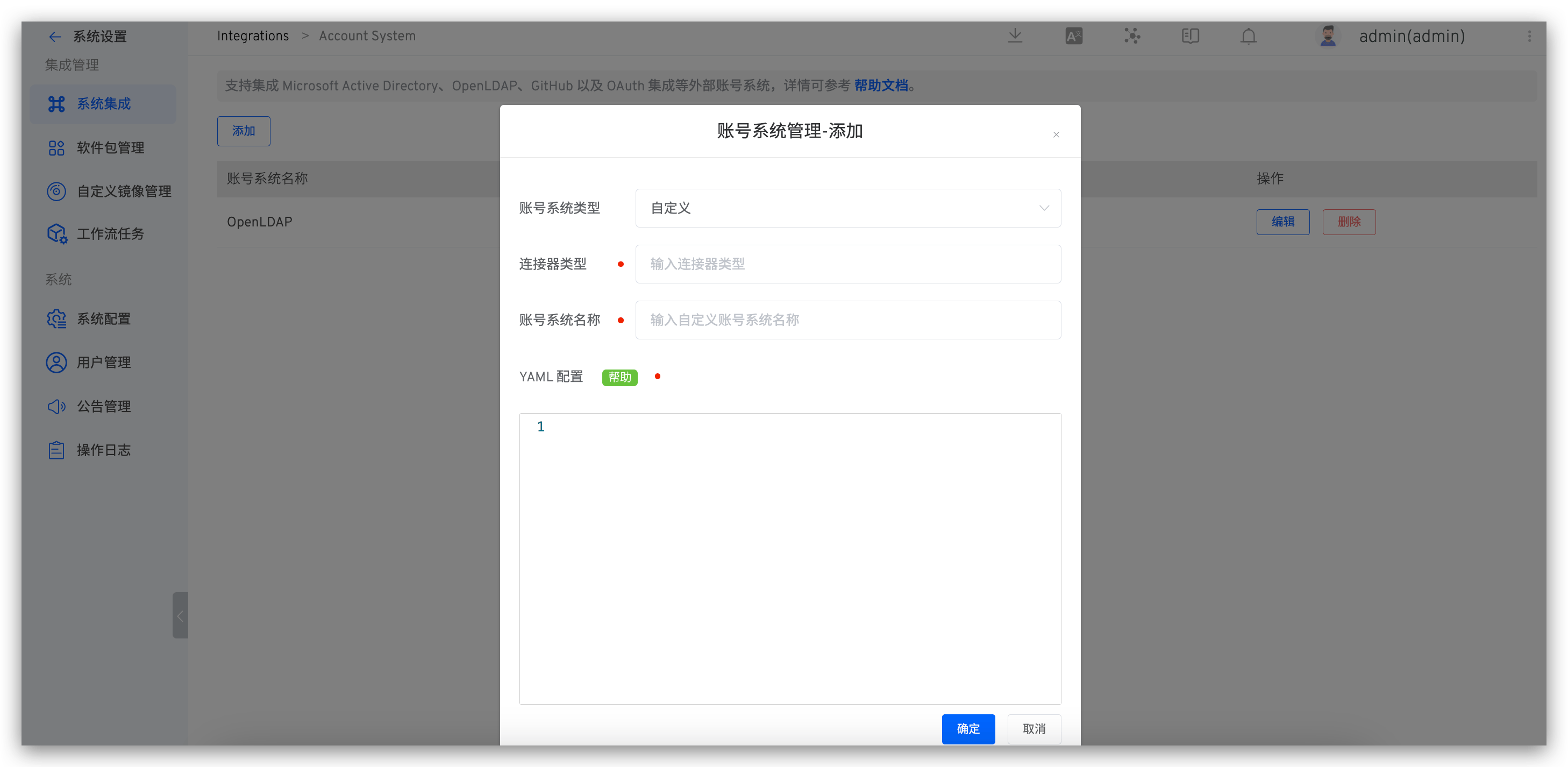
登录 Zadig 平台后,在系统设置 -> 账号系统集成-> 自定义账户类型录入 YAML 配置,如下图所示。
YAML 配置由 Connector 中的
Config结构体生成。
# 步骤 4:使用自定义账号系统登录 Zadig
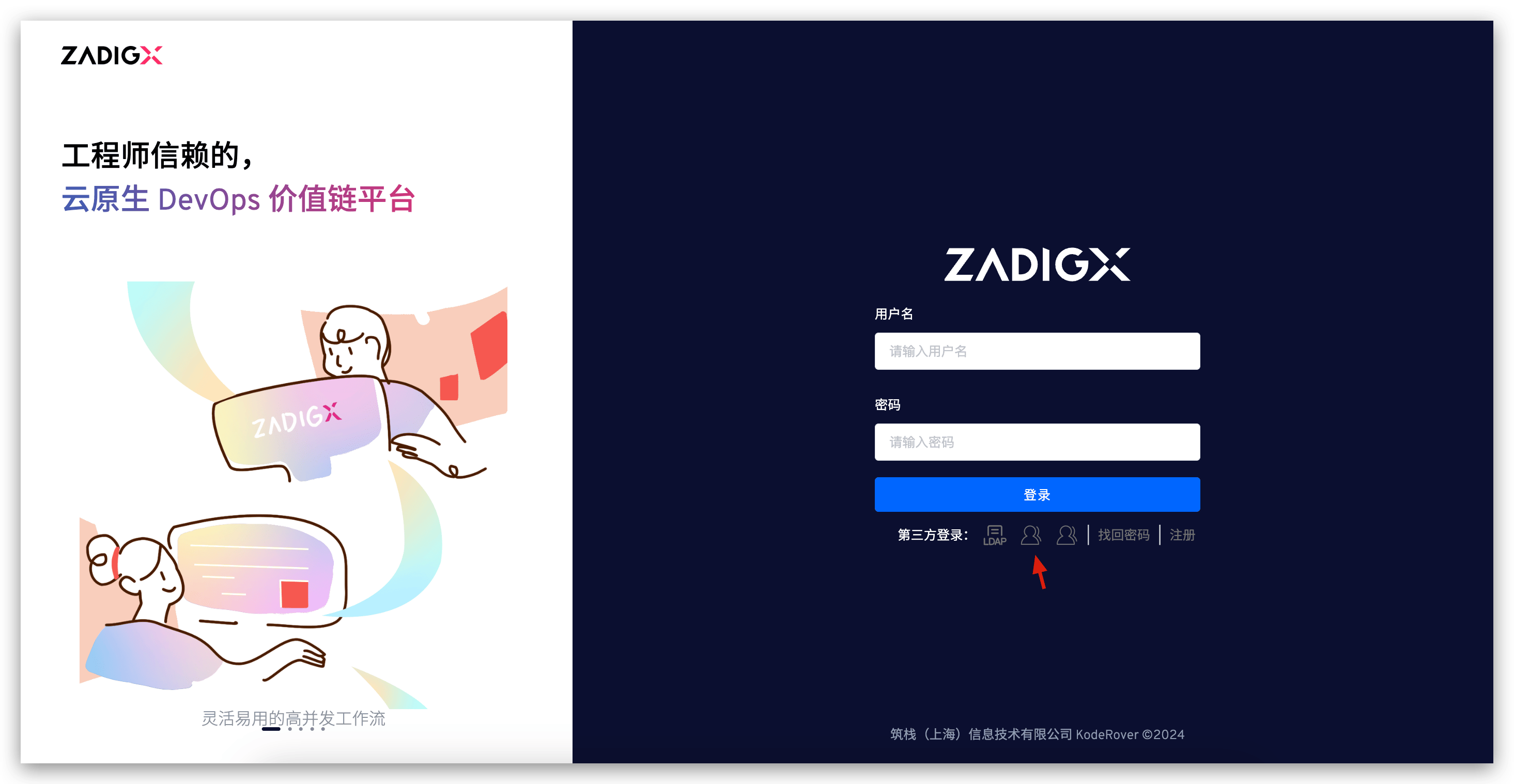
访问 Zadig 登录页面,点击第三方登录,如下图所示。跳转到对应的登录页面,输入用户名密码即可登录 Zadig 系统。
# [可选]设置为默认账号系统
参考设置默认账号系统。